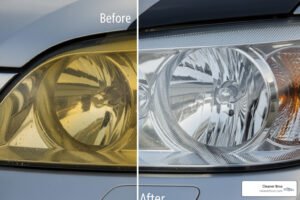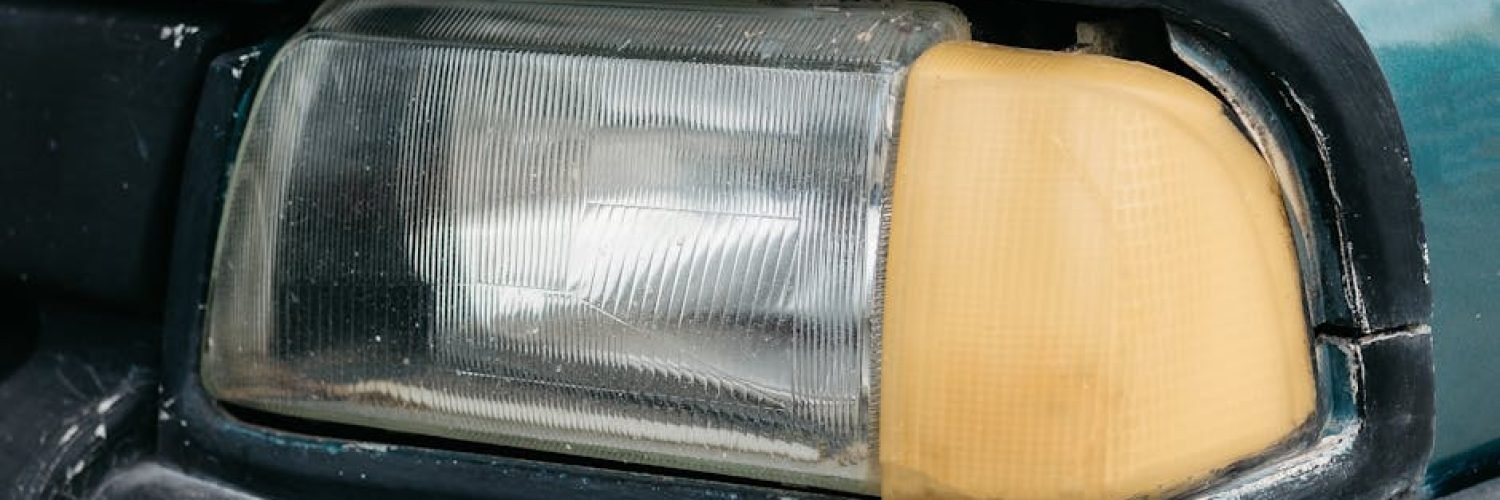
Why do headlights get cloudy? The clear plastic lens loses its factory UV coating over time, and once that protection wears away, sunlight oxidizes the bare polycarbonate underneath — turning it hazy, then yellow, and cutting how much light reaches the road.
Quick Answer: The Cause Chain
- Factory UV coating wears off from sun, heat, and washing.
- Bare polycarbonate is exposed to direct sunlight.
- UV light oxidizes the plastic, breaking down its surface.
- The lens hazes and yellows, scattering light instead of projecting it.
- Your headlight output drops, making night driving less safe.
That’s the whole story in five steps. Understanding it explains why quick fixes fade and why sealing is the key to a lasting repair.
UV and Oxidation: Why Headlights Get Cloudy
Modern headlight lenses are made of polycarbonate, a tough, lightweight plastic that’s far more impact-resistant than glass. However, polycarbonate is vulnerable to ultraviolet light, so manufacturers spray on a thin protective film at the factory. That film is the only thing standing between the sun and the plastic.
Over years of sun, heat cycling, and car washes, that coating thins and cracks. Once it fails, UV rays reach the raw plastic and trigger photodegradation — a chemical breakdown of the surface. The result is the familiar cloudy, milky haze that slowly deepens into a yellow or brown tint. In short, it isn’t dirt on the outside or fog on the inside; it’s the plastic itself degrading.

Why Cloudy Headlights Are a Safety Issue
This is more than a looks problem. As the lens hazes, it scatters the beam in every direction instead of focusing it down the road. Studies of degraded headlights have found they can lose up to 50% of their effective light output — which means you see far less at night, and your reaction distance shrinks right when you need it most. Poor headlight performance is a recognized factor in nighttime driving safety.
Because the change happens gradually, most drivers don’t notice how dim their headlights have become until they’re restored and the difference is obvious. That slow creep is exactly what makes oxidation sneaky.
What Makes It Worse in Utah
Utah County is a tough environment for headlights, and a few local factors speed up the fade:
- High-altitude UV: much of the county sits above 4,500 feet, and UV intensity climbs with elevation.
- 200+ sunny days a year: more direct sun means more oxidation, faster.
- Winter road salt and grit: abrasive spray wears the protective coating down at the surface.
- Big temperature swings: hot summers and freezing winters stress and crack the coating.
Put together, these conditions mean Utah County headlights often cloud over sooner than they would in a milder, cloudier climate.
How to Fix and Prevent It
The fix follows the cause: remove the oxidized layer, then replace the lost UV protection. You can do it yourself — here’s how to restore them yourself — or start with the lighter overview of how to fix cloudy headlights. Either way, the sealing step is what prevents a fast return of the haze.
| Prevention step | Why it helps |
|---|---|
| Reapply a UV sealant yearly | Replaces the protection before the plastic is exposed |
| Park in shade or a garage | Cuts direct UV, the root cause |
| Wash gently, no harsh solvents | Preserves the coating longer |
| Restore at the first sign of haze | Stops light oxidation from becoming deep yellowing |
Prefer to have it handled? Our team can restore your headlights professionally and seal them to slow the whole cycle down. Wondering how long that holds? See how long results last.
Common Mistakes to Avoid
- Assuming it’s just dirt. Oxidation is in the plastic — cleaning won’t touch it.
- Polishing without re-sealing. Exposed plastic re-oxidizes almost immediately.
- Ignoring early haze. Light cloudiness is far easier to fix than deep yellowing.
- Leaving the car in full sun daily. Constant UV is what drives the whole process.
- Using abrasive household cleaners. They can scratch and cloud the lens further.
Frequently Asked Questions
Can you prevent headlights from yellowing?
You can’t stop it entirely, but you can slow it dramatically. Reapplying a UV sealant, parking in shade, and washing gently all preserve the protective layer that keeps oxidation at bay. Prevention is far easier than a full restoration later.
Why did my headlights fog up again so fast?
Almost always because the last job wasn’t sealed. Sanding and polishing clear the lens but strip away protection, so without a fresh UV coat the bare plastic starts oxidizing right away — sometimes within weeks, especially under Utah’s strong sun.
Do all cars get cloudy headlights?
Nearly all modern cars can, because almost all use polycarbonate lenses. How fast it happens depends on the car’s age, how much sun it sees, and how well the factory coating holds up. Vehicles parked outdoors in sunny climates cloud over soonest.
Clear Up the Cause, Not Just the Symptom
Now you know why headlights get cloudy: worn UV coating, exposed polycarbonate, and relentless sun. The lasting fix removes the damage and reseals the surface. If you’d like it done right and protected, our team can restore your headlights professionally anywhere in Utah County.
Book online or call 385-375-7652 for clear, safe headlights that stay that way.